

How to Judge What Makes Hot Sauce Premium Quality
Table of Contents
- What Premium Hot Sauce Actually Means
- Premium Hot Sauce Ingredients That Matter
- Getting the Flavor and Heat Balance Right
- How to Taste Hot Sauce Systematically
- Production, Freshness, and Storage Basics
- Choosing the Best Hot Sauce for Everything
- Try a Premium Habanero Lineup at Home
- Frequently Asked Questions
What Premium Hot Sauce Actually Means
Premium hot sauce is not defined by heat alone, so answering what makes hot sauce premium quality starts with flavor. Most of the sauces on a grocery shelf deliver a sharp, vinegary burn and not much else.
Quality is easier to judge when you break it into measurable parts.
Price is a useful signal, but not a guarantee. Our 5 oz bottles are $10.00 each. Compare any sauce on the same criteria: ingredient list, flavor balance, and how it performs on the food you actually cook.
Premium Hot Sauce Ingredients That Matter
The ingredient list is the most honest part of the bottle. Short lists built on peppers, vinegar, and a few supporting flavors usually point to a sauce that tastes like its ingredients. Long lists packed with thickeners, artificial flavor, and preservatives often mask a thin base.
Peppers, Vinegar, and Fresh Herbs
When you ask what makes hot sauce premium quality, peppers do the heavy lifting. Habanero brings fruity, floral notes alongside its heat, and a sauce that uses real pepper mash will taste different from one built on capsaicin extract.
Fresh herbs add the final layer. Herbs in a hot sauce should taste like herbs, not like a dusty afterthought. When you taste a sauce, look for pepper flavor first, then acidity, then the herbs. If the herbs are the first thing you notice, the balance is probably off.
Reading Labels and Ingredient Trade-Offs
Learn to read labels with a few simple questions. Does the sauce list whole peppers or a generic "pepper extract"? Is vinegar the main liquid, and is it named? Are sweeteners or thickeners near the top of the list? Each answer points to a trade-off. A sauce with more sugar may be easier to like, but it can dull the pepper flavor.
Shoppers often assume "all natural" settles the question. It does not. Check for specific ingredients, and treat vague claims as a prompt to look closer.
Getting the Flavor and Heat Balance Right
Heat matters, but a sauce that only burns is a one-note condiment. The best sauces let you taste the peppers, feel the acidity, and then notice the heat building.
Start with mild or medium heat if you are unsure. A habanero sauce should bring warmth without overwhelming the food. The Pineapple Habanero and Lemon Pepper varieties lead with pineapple and lemon flavor, followed by habanero heat.
Sweetness and acidity are the other two levers. Pineapple adds sweetness that softens the burn, while lemon adds a clean, sharp lift that cuts through rich food. Neither hides the pepper.
How to Taste Hot Sauce Systematically
Most ranking guides tell you to "taste and compare" without giving you anything to compare against. A systematic tasting turns a subjective impression into a repeatable score, which is the only way to tell whether a $10.00 bottle actually outperforms a $4.00 one. The method below takes about ten minutes for four sauces and produces a written record you can use the next time you shop.
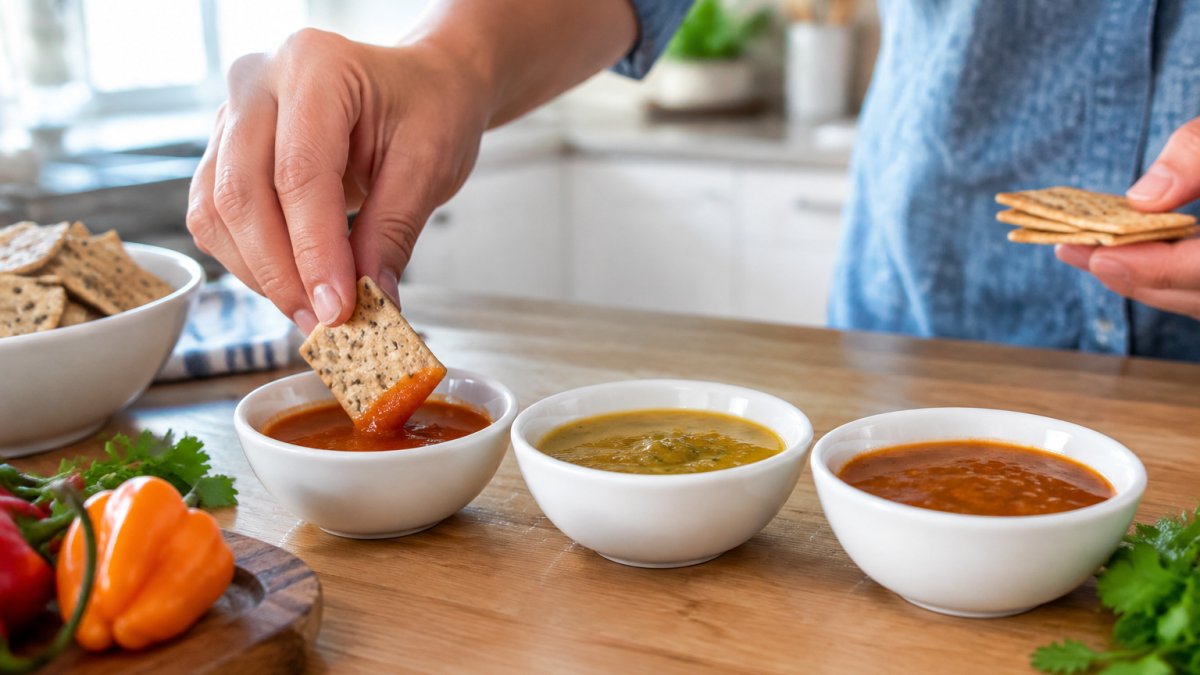
Set Up a Controlled Tasting
Use four identical small bowls or spoons, one per sauce, and a stack of plain saltine crackers or plain bread. Avoid flavored crackers, which add salt and fat that mask pepper flavor. Taste in the same order every time, mildest to hottest, because capsaicin desensitizes the tongue and a hot sauce tasted first will flatten everything after it. Eat a bite of cracker and sip water between samples, and wait about 30 seconds so your palate resets.
Score Five Criteria on a 1-5 Scale
Write the sauce name and score each criterion from 1 (weak) to 5 (excellent). The five criteria mirror how most practitioners evaluate a sauce:
- Aroma: Smell before tasting. Does it smell like the named pepper, or like vinegar and extract? A habanero sauce should carry fruity, floral notes; a sauce built on capsaicin extract often smells sharp and chemical.
- Initial flavor: The first two seconds on the tongue. Can you identify the pepper and any fruit, garlic, or herb before heat arrives? If vinegar or sugar dominates, note it.
- Heat progression: Does heat build gradually, peak, and fade, or hit all at once and stay flat? Gradual progression usually signals real pepper solids rather than extract.
- Mid-palate balance: Acidity, sweetness, and salt should support the pepper, not cover it. A sauce that tastes sweet and nothing else is leaning on sugar; one that tastes only of vinegar is leaning on acid.
- Finish and texture: How long does heat linger, and does the flavor stay pleasant? Check body too, a sauce thickened with starch or gum coats the tongue differently than one that separates naturally.
Compare Scores, Not Impressions
Add the five scores for a total out of 25. A sauce scoring 20 or higher across aroma, flavor, heat progression, balance, and finish is performing at a premium level on your palate; a sauce scoring below 15 is usually carrying filler, extract, or an unbalanced acid load. Compare totals side by side rather than ranking from memory, the written score exposes sauces that taste impressive on the first spoon but fall apart on the third.
Watch out: tasting on an empty stomach or immediately after a spicy meal skews every score, so eat something mild first and keep the samples small, a quarter-teaspoon is enough to evaluate flavor without overwhelming your palate.
Turn the Score Into a Buying Decision
A sauce that scores well on aroma and initial flavor but poorly on heat progression is often an extract-based product; one that scores well on balance but low on texture may simply be thin by design. Neither is automatically bad, the score tells you which trade-off you are buying. Keep your scorecards and re-taste the same sauce a month later; consistent scores across bottles are one of the clearest signs of a producer who controls their process.
The article's five-criteria scoring method can be summarised as a quick reference for side-by-side tasting.
| Criterion | What to check | Score |
|---|---|---|
| Aroma | Smells like the named pepper, not just vinegar or extract | 1-5 |
| Initial flavor | Pepper, fruit, garlic or herb identifiable before heat | 1-5 |
| Heat progression | Builds, peaks and fades gradually | 1-5 |
| Mid-palate balance | Acid and sweetness support the pepper | 1-5 |
| Finish and texture | Heat lingers pleasantly; body not starch-coated | 1-5 |
| Total | Scores of 20+ out of 25 indicate premium performance | /25 |
Production, Freshness, and Storage Basics
Freshness and safety are the parts of premium quality most shoppers never think about, and most ranking guides skip them entirely. They matter because a sauce is a preserved food: its acidity, salt, sugar, and processing method determine both how long it stays safe and how its flavor holds up after opening. Understanding those levers lets you judge a bottle before you buy it and store it correctly after.
Why Acidity Is the Backbone of Shelf Stability
Vinegar and other acids lower a sauce's pH, and a lower pH is what keeps most hot sauces from spoiling at room temperature before opening. Commercially bottled acidified sauces are typically formulated to sit below a pH of 4.6, the threshold at which many spoilage and harmful bacteria stop multiplying, that number is the reason vinegar appears high on most ingredient lists. A sauce with less acid needs another hurdle, such as refrigeration, higher salt, or a validated thermal process, to stay safe.
Fresh, Fermented, and Cooked Sauces Age Differently
The production style changes both flavor and storage needs. Fresh or refrigerated sauces, often sold in the refrigerated case, are typically not heat-treated after blending, so they depend on refrigeration and a short use-by window. Fermented sauces rely on lactic acid bacteria to lower pH naturally, which adds tang and complexity but requires the producer to control salt concentration and temperature so the right microbes win. Cooked or pasteurized sauces are heated to reduce microbial load and usually carry the longest unopened shelf life.
Read the Label for Safety and Freshness Cues
Check four things on any bottle: the acid source and where it appears in the ingredient order, the presence of a "refrigerate after opening" instruction, the use-by or best-by date, and whether the producer publishes pH or processing information. A maker who expects scrutiny usually states these details. A bottle with no storage guidance and a vague date is a prompt to ask the seller how the sauce was processed.
Store It So Flavor Holds Up
Once opened, keep the bottle refrigerated unless the label explicitly says otherwise, store it away from direct light and heat, and always use a clean spoon or a clean pour to avoid introducing bacteria. Shake before use, separation is normal in sauces made without heavy thickeners and is not a defect. Watch out: if the color darkens noticeably, the smell turns sour or off, the cap bulges, or the texture becomes slimy, discard the bottle rather than tasting it; those are signs the preservation system has failed.
Production Transparency as a Quality Signal
Ask where the peppers come from, whether the sauce is made in small batches or co-packed at scale, and whether the producer can describe their process. Scale alone does not make a sauce inferior, and clear production information helps buyers judge a product. Compare bottle size, ingredient lists, allergen notes, and storage instructions across options, and treat clear production information as evidence the maker stands behind the sauce.
Choosing the Best Hot Sauce for Everything
No single sauce works on every dish, so the best approach is to match the sauce to the food. For wings and grilled meats, a sauce with a strong vinegar base and clear pepper flavor holds up well.
Keep a small shortlist of two or three sauces with different profiles rather than buying a large bottle of one. That way you can test what works in your kitchen. If you cook for family and friends, a milder option on the table alongside a bolder one gives everyone a choice.
Our Habanero Hot Sauce is a good starting point for everyday cooking. It is made with red peppers, habanero peppers, cubanelle peppers, distilled vinegar, apple cider vinegar, water, and spices, and it is vegan, dairy-free, and nut-free. It is not celiac friendly, so check the label if that matters for you.
Try a Premium Habanero Lineup at Home
The fastest way to judge premium quality is to taste it side by side. Our lineup gives you four different profiles at $10.00 per 5 oz bottle: Habanero Hot Sauce, Pineapple Habanero Hot Sauce, Lemon Pepper Hot Sauce, and Hot Pickle Hot Sauce.
Start with the Habanero Hot Sauce to learn the base flavor, then move to Pineapple or Lemon Pepper for something brighter. When you are ready for something unexpected, try the Hot Pickle sauce on a sandwich or with fried foods. Explore the full Lendora's Habenero Hot Sauce lineup and find the bottle that fits your kitchen.

Frequently Asked Questions
What makes a hot sauce premium quality?
Premium hot sauce is usually defined by recognizable ingredients, real pepper flavor, balanced heat and a consistent texture from batch to batch. Look for named peppers, vinegar and herbs near the top of the ingredient list rather than extracts or long lists of additives. Small-batch producers often make the difference easier to judge because they can be more specific about sourcing and recipe. Taste the sauce for depth, not just burn: a premium sauce should have flavor that continues after the heat fades.
Does a higher Scoville rating mean a better hot sauce?
No. Scoville Heat Units measure capsaicin, not quality. A sauce can reach high heat through extract and still taste flat, sharp or one-dimensional. Balanced sauces, like many habanero-based recipes, use pepper flavor, acidity and aromatics to create interest at moderate heat. Use the Scoville rating as a guide to how hot a sauce will feel, and judge quality by how the flavor develops on your palate.
How should you taste hot sauce to evaluate its quality?
Start with a small amount on a neutral cracker or plain rice so nothing else competes. Note the aroma first, then the initial flavor, the middle notes and the aftertaste. Check whether the sweetness, acidity, pepper and salt feel balanced. Taste it alone, then on a food you actually cook, such as eggs, wings or tacos. Compare two or three sauces side by side and write down what stands out, so your preferences become clear over time.
Is fruit in hot sauce a good sign?
It can be, when the fruit is used to build flavor rather than mask it. Pineapple habanero, for example, leads with bright sweetness, then habanero heat, then a tangy finish. Fruit-forward sauces suit seafood, chicken and grilled dishes well. If you are unsure, try a small bottle first and see whether the sweetness complements your cooking or overwhelms it.
